
 Website audit
 SEO audit
 Technical audit
 UX & Conversion audit
 AI/LLM Visibility audit
 Ecommerce audit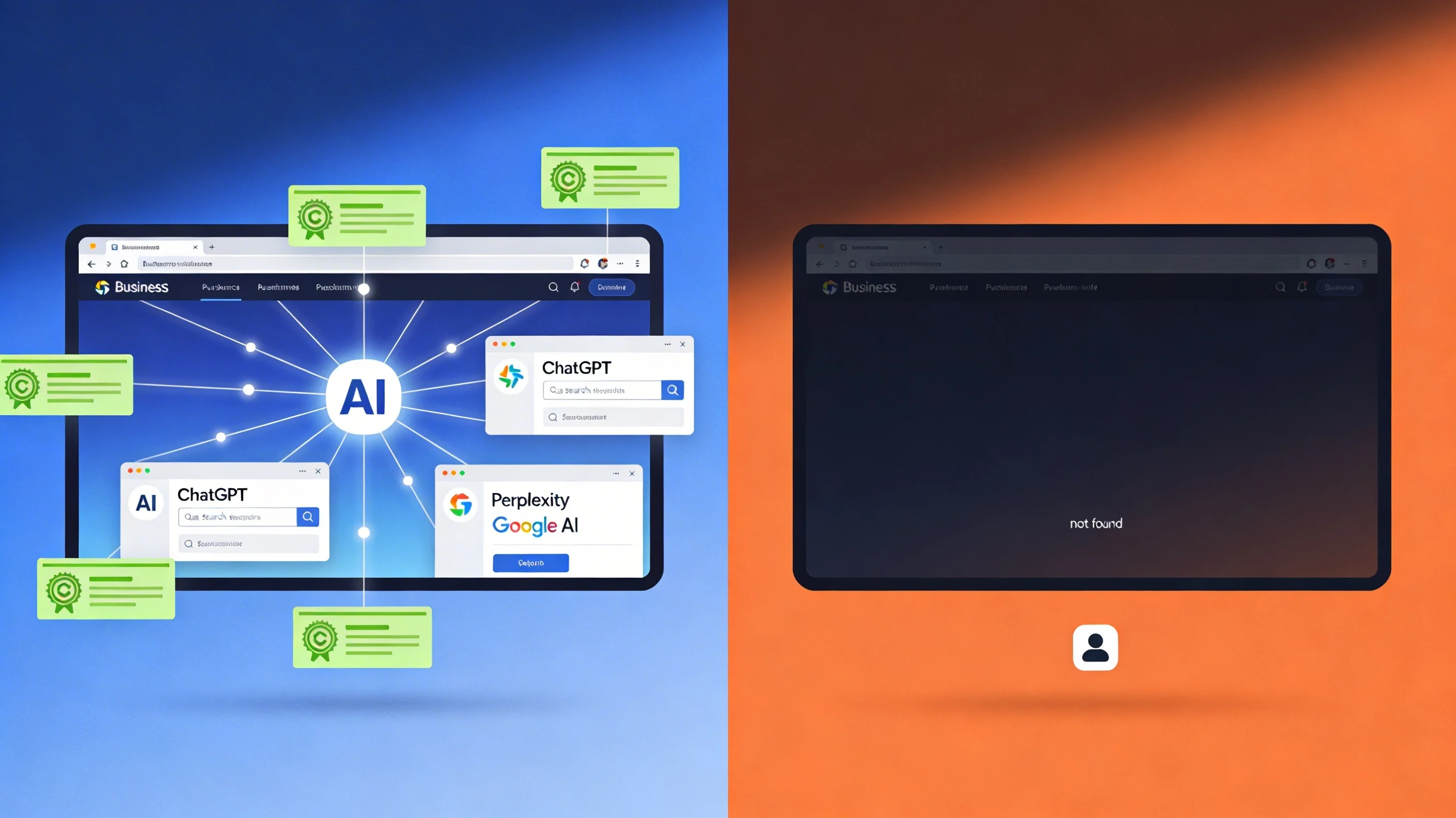
You searched your competitor's name in ChatGPT. They showed up - cited by name, with a short description, sometimes even a link. You searched yours. Nothing came back. Or worse: something came back - outdated, vague, or just wrong.
That gap has a clear reason. It comes down to a specific set of decisions they made - probably in the last 12 months - that you haven't made yet. Budget, brand age, years of SEO work - those factors matter far less than you'd expect. Here's what those decisions look like, with real data from the sites we've audited.
The Search Shift That Already Happened
Most business owners still think about search as: someone types into Google, clicks a link, lands on a site. That model still works - but it's no longer the whole picture.
ChatGPT now handles 891 million monthly queries globally, representing 17.6% of all digital searches as of Q1 2026. Google AI Overviews appear in nearly half of all searches and have cut organic click-through rates by 61%. Roughly 60-68% of Google searches end without a single click to any website. Gartner projects a 25% drop in traditional search engine traffic by the end of 2026.
This shift already happened. And most businesses are still catching up.
What this means practically: a potential client types "best website audit service for SaaS companies" into ChatGPT or Perplexity. They read the answer. They click one or two of the cited sources. They don't go back to Google. A brand that appears in that answer gets the click. Everyone else gets skipped.
| Behavior | 2023 | 2026 |
|---|---|---|
| Google search → click on website | Dominant pattern | ~35% of searches produce a click |
| AI chat used for research | Rare | 23% of informational queries now go to ChatGPT |
| Decision made without clicking any site | Occasional | 60-68% of all searches |
| Brand checked in AI before purchase | Almost never | Growing default behavior |
What the Winning Sites Are Doing
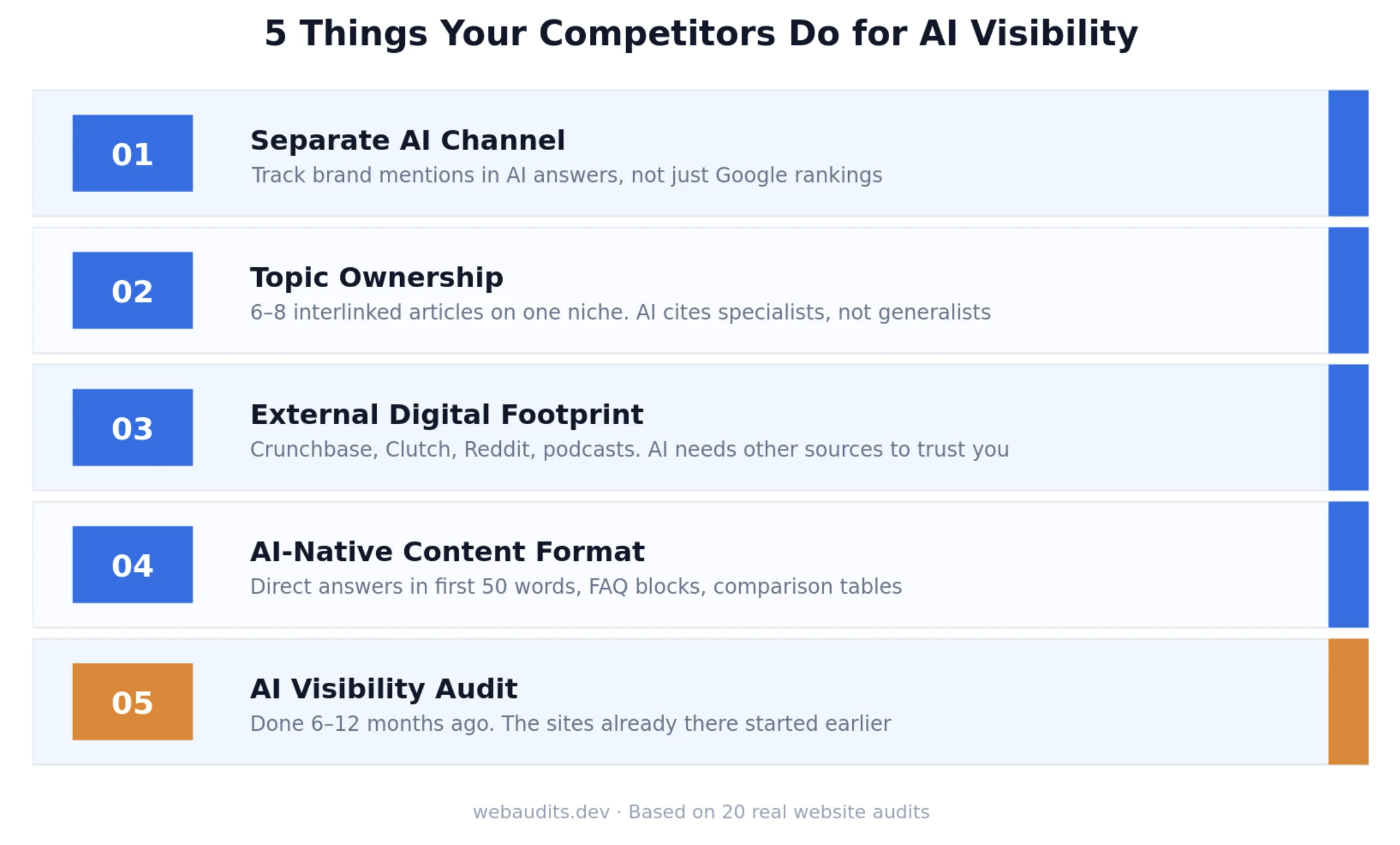
When we compare the sites that consistently appear in ChatGPT and Perplexity answers against the ones that don't, five patterns come up every time.
1. They treat AI search as a separate channel
"Better SEO" gets you higher on Google. Getting into ChatGPT takes something different. The sites that show up there made a deliberate decision: AI visibility is its own channel, with its own content requirements, its own audit process, and its own metrics.
For traditional SEO, you track rankings and organic traffic. For AI visibility, you track brand mentions inside AI answers - how often ChatGPT, Perplexity, or Gemini references you when someone asks about your topic. These are different metrics. Most sites measure only one of them.
2. They own a topic, not a keyword list
There's a pattern across every site we've audited that consistently gets cited by AI tools: topical depth beats topical breadth. One page optimized for "web audit" does less for AI visibility than five interlinked pages covering every angle of web auditing - what it is, what it costs, who needs it, what a real audit report looks like, and what the most common findings are.
AI models build a knowledge map of what each domain is authoritative about. A site with scattered content looks like a general directory. A site with 6-8 tightly linked pieces on one topic looks like a specialist. AI cites specialists.
3. They have a real digital footprint outside their own domain
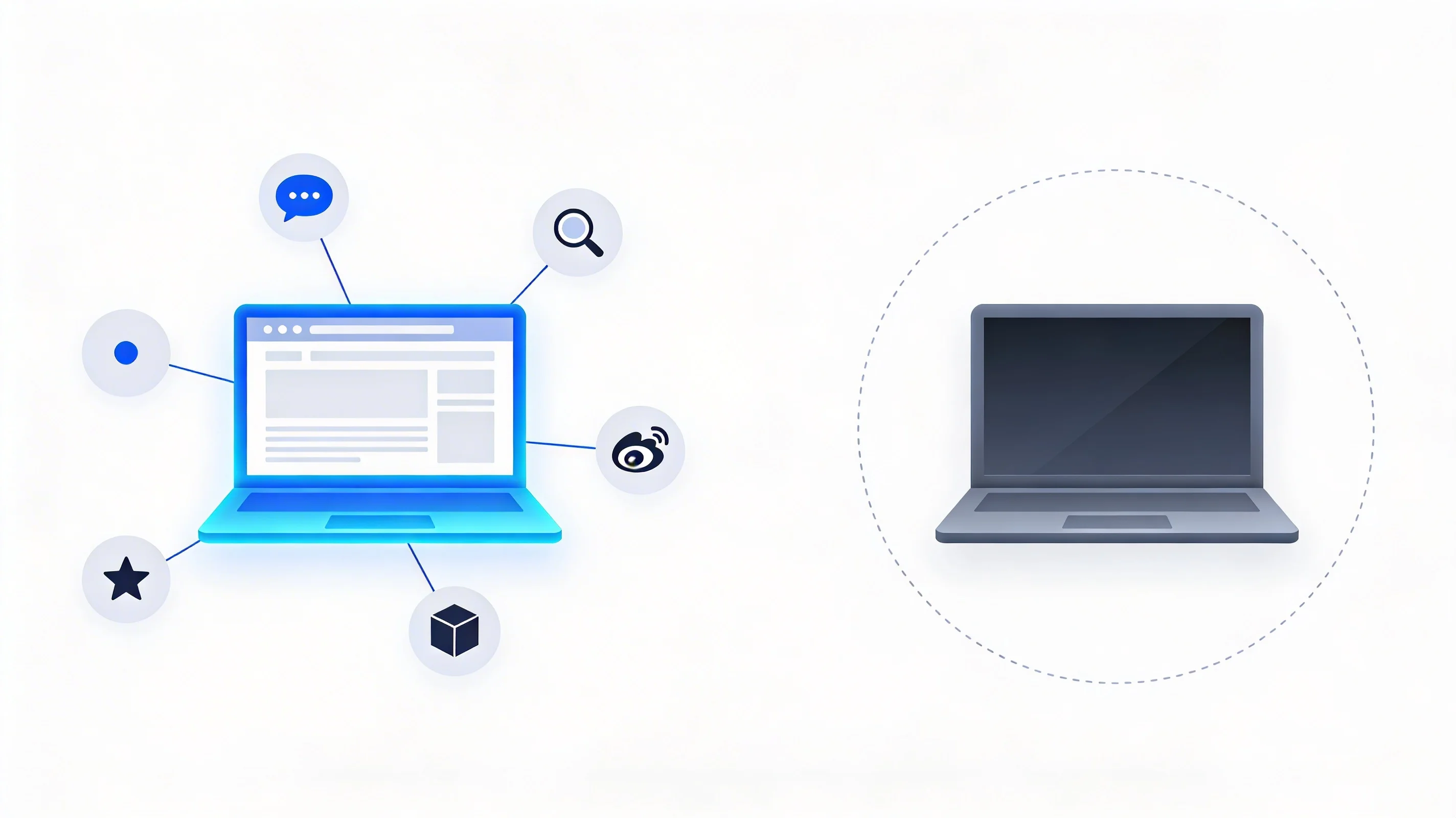
This is the most underestimated factor we see. The sites appearing in AI answers have a well-built website - and they exist beyond it. Crunchbase profile. Clutch listing with reviews. A guest article in one industry publication. A podcast transcript. A Reddit thread where someone mentioned them by name. If you're also working on the website side, see our UX design audit tools for the technical and usability layer.
Only 11% of domains are cited by both ChatGPT and Perplexity. The ones that make it into both have one thing in common: their brand name appears in credible sources that AI models learn from. AI needs to see other sources talking about you - your site is the starting point.
4. Content Structured for Extraction
AI reads a page for extractable answers - a direct response to a question, ideally in the first 50 words of a section. Structured content gets picked up: FAQ blocks, comparison tables, headers phrased as questions. Paragraph walls get passed over.
The competitors showing up in AI answers have content that anticipates the question. Their H2 headers are actual questions. Their opening sentences answer those questions directly. Their service pages end with an FAQ block. That structure makes the content easy to cite - and hard to ignore.
5. AI Visibility Audit
This one's straightforward. The sites that rank in AI answers started paying attention to AI visibility 6-12 months ago. They audited their site, found the gaps, fixed them. The sites still absent from AI answers skipped that step entirely.
Every week that passes, the sites that got there first accumulate more citations, more external mentions, more topical authority. The gap compounds.
The Gap in Numbers: What We Found Across 20 Audits
When we compare the profile of sites that get cited by AI tools against the ones that don't, the differences are consistent enough to be predictive.
| Signal | Sites AI cites regularly | Sites AI ignores |
|---|---|---|
| External brand mentions | 15-30+ credible sources | 0-3 sources, mostly their own domain |
| Content format | Direct answers in first 50 words, FAQ blocks, tables | Long paragraphs, keyword-optimized but question-blind |
| Topical depth | 5-10 interlinked pieces per core topic | 1-2 disconnected articles per topic |
| Author signals | Named author, bio, external presence | Anonymous content or no attribution |
| AI Visibility Audit | Done at least once | Never conducted |
| Content freshness | Updated or expanded quarterly | Published and untouched |
The number that stands out most from our audits: 17 of 20 sites had almost no brand presence outside their own domain. Good website, solid Google rankings in some cases - and essentially no AI footprint. That's the gap. And it's fixable.
A 90-Day Plan to Close It
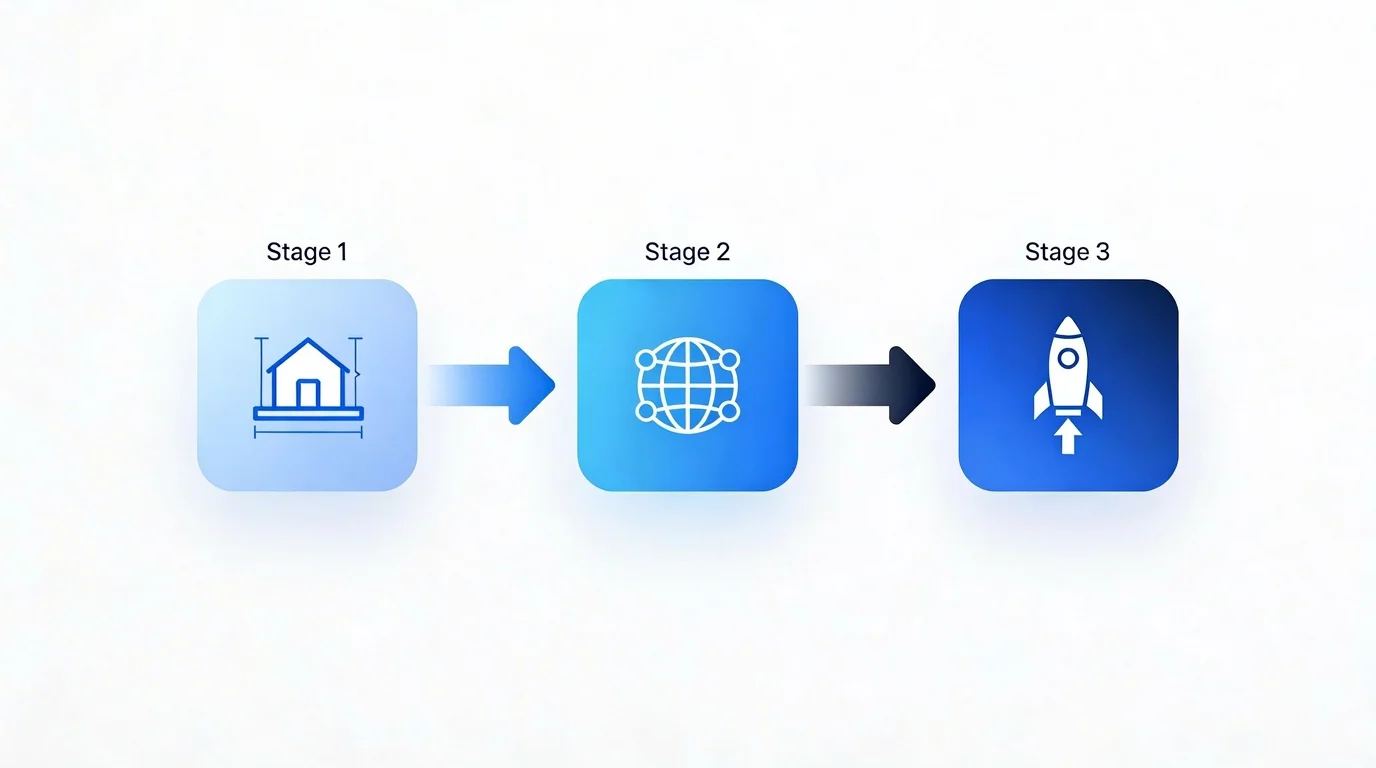
The order here matters. Each step builds on the one before it - skip ahead and you're fixing the roof before the foundation.
Month 1 - Foundation
Before you build external presence, the on-site signals need to be in order - otherwise you're sending traffic to a site AI still can't parse correctly.
- Run an AI visibility audit. Know exactly what's missing before you guess at fixes.
- Pick one core topic your business owns. Everything for the next 90 days flows from that choice.
- Add JSON-LD schema to your top 5 pages: Organization, WebPage, and FAQPage where relevant.
- Add a named author with a real bio and a link to their LinkedIn on every piece of content.
- Rewrite the opening paragraph of your top 3 pages to answer a direct question in the first 50 words.
Month 2 - Footprint
Now you build the external signal. This is the step most sites miss - and the one that separates brands AI cites from brands AI overlooks.
- Claim and fully complete your Crunchbase and Clutch profiles. These are directly indexed by AI pipelines and take under an hour to set up.
- Get 3-5 real client reviews on Clutch or G2. AI models weight these sources heavily.
- Publish one piece of content outside your own domain - a guest article, a contributed post, a bylined opinion piece in an industry publication.
- Find 2-3 active Reddit threads in your niche. Contribute genuinely - not as promotion, as a real answer. The mention is what matters.
- Publish articles 2 and 3 in your topical cluster.
Month 3 - Acceleration
Check your progress and push on what's working.
- Run the AI check again: open ChatGPT, Perplexity, and Gemini separately. Search your core service + your niche. Search your brand name directly. See what's changed.
- Add FAQ sections with schema markup to every service page that's missing one.
- Book one podcast appearance - even a small show in your niche. The transcript is what gets indexed.
- Start your second topical cluster if the first is showing traction.
The timeline splits into two tracks. On-page fixes - schema, FAQ, content structure - register in AI tools within 4-8 weeks. External mentions build slower, typically 3-6 months before they consistently pull citations. The sites we've seen gain ground fastest treat these as parallel workstreams, not a sequence.
Check Where You Stand Right Now
Before anything else, run this check - it takes five minutes.
Open ChatGPT. Type: "What do you know about [yourdomain.com]?" Then search your main service in your niche: "best [your service] for [your type of client]." Do the same in Perplexity. Note whether your brand appears, whether what it says is accurate, and who it cites instead of you.
That result is your baseline. Everything above is how you change it.
If your competitors are already showing up in those answers and you're absent - the gap is real, it's measurable, and it grows every week. Start the check above. That's where the work begins.
Frequently Asked Questions
How do I know if my competitor is appearing in AI search?
Open ChatGPT or Perplexity and search the service category your competitor operates in - for example, "web audit services for ecommerce." If their name or site appears in the answer, they have AI visibility in that category. Search their brand name directly too - the amount and accuracy of information that comes back tells you how strong their AI footprint is. For ongoing tracking, tools like Brandwatch or dedicated GEO monitoring platforms can automate this check across multiple AI tools at once.
Can a small business compete with larger brands for AI visibility?
Yes - and in some ways more easily. Large brands have more content, but they also cover more topics and have more diluted authority. A small business that becomes the clearest, most structured source on one specific topic can outperform larger competitors in AI citations for that niche. We've seen this pattern repeatedly in our audits.
What's the fastest way to get cited by ChatGPT?
Claim high-authority third-party profiles first - Crunchbase, Clutch, G2. These are directly included in LLM training datasets and get picked up faster than new content on your own domain. Then add FAQ schema to your existing service pages. These two steps together are the fastest path to appearing in AI answers.
Is GEO the same thing as AI visibility optimization?
GEO (Generative Engine Optimization) is the broader practice. AI visibility optimization is the measurable outcome - specifically, whether AI tools cite, mention, or reference your brand when someone asks a relevant question. GEO is how you get there.
How much does improving AI visibility typically cost?
The on-site work - schema, content restructuring, FAQ sections, author markup - can be done without additional budget if you have content resources in-house. The external footprint work - directories, guest content, PR mentions - has either a time cost or a budget cost depending on how you approach it. A professional AI visibility audit typically costs between $500 and $2,000 depending on site size and depth of analysis.
Do I need a different approach for ChatGPT vs. Perplexity vs. Gemini?
The foundation is the same across all three: authoritative content, verified authorship, external mentions, structured data. Where they differ is how they retrieve information. Perplexity crawls the web in real time - fresh content and new external mentions show up faster there. ChatGPT and Gemini rely more on training data, which updates on longer cycles, so on-site signals take longer to register but tend to be more stable once they do.