
 Website audit
 UX & Conversion audit
 Ecommerce audit
SyncSupport AI Visibility Audit: 29/100 Health Score
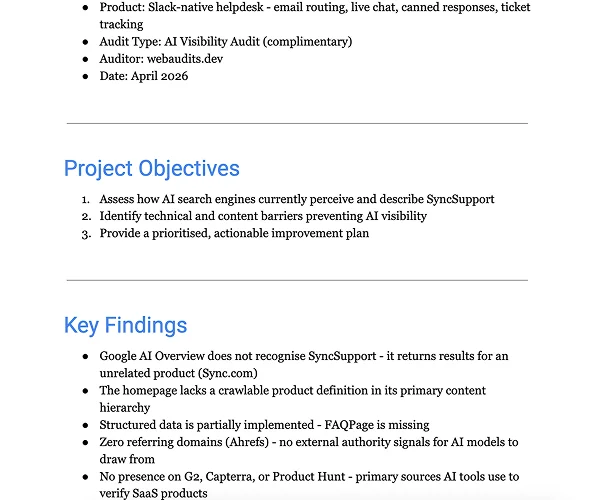
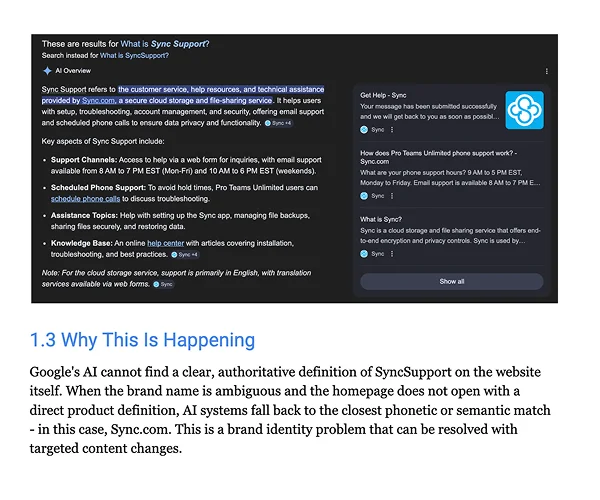
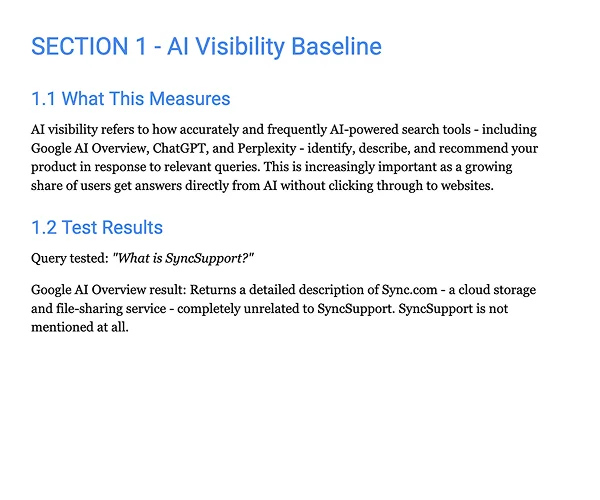
SyncSupport is a Slack-native helpdesk - email routing, live chat, canned responses, ticket tracking. When we ran a branded search through Google AI Overview, it returned a detailed description of Sync.com, a cloud storage service. SyncSupport wasn't mentioned at all.
The overall AI visibility health score came in at 29 out of 100. Zero referring domains. No listings on G2, Capterra, Product Hunt or Crunchbase - the primary sources AI models use to verify SaaS products. The homepage hero described pain points without naming the product category in any heading, leaving AI crawlers with no clear product definition to work from.
Overall AI visibility health score
Referring domains at time of audit
Critical AI visibility issues found
Project Overview
Services provided
- AI / LLM Visibility Audit
- Structured Data Review
- E-E-A-T & Trust Signal Analysis
- Content Hierarchy Review
- Authority Signal Audit
What Was Blocking AI Visibility
SyncSupport is a Slack-native helpdesk for teams managing customer support directly in Slack. The product is at an early stage, and the AI visibility audit showed several gaps across the areas that matter most to LLMs: content clarity, authority signals, structured data, and trust.
The most notable finding: a branded Google AI Overview search for "SyncSupport" returned a description of Sync.com - a cloud storage service with a similar name. The cause was straightforward: the homepage didn't name the product category in any heading, which left AI models without a clear anchor to distinguish SyncSupport from a better-known product with a similar name.
On the authority side, Ahrefs showed zero referring domains at the time of the audit. There were also no listings on G2, Capterra, Product Hunt, or Crunchbase - directories that AI tools like ChatGPT, Perplexity, and Claude regularly use to verify SaaS products and pull basic product facts from.
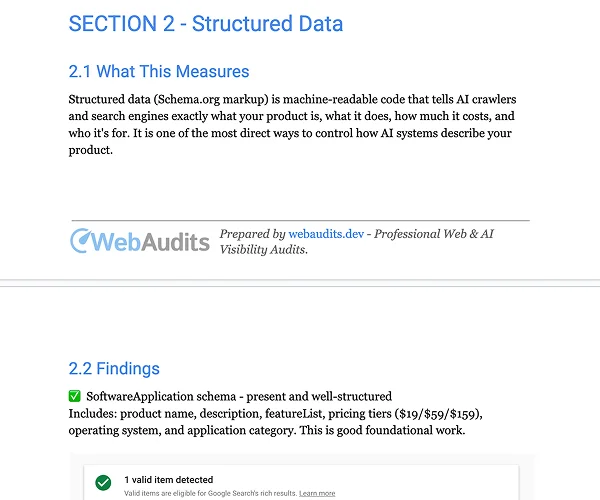
Structured data was partially in place but missing FAQPage schema across all pages. The About page had no founder information - for a new product without press coverage or backlinks, founder credentials are one of the more accessible trust signals available to AI models.
Key Issues Found
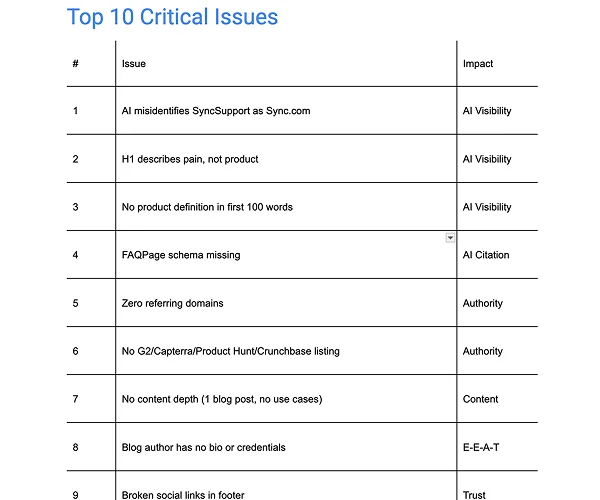
- Google AI Overview returning Sync.com instead of SyncSupport
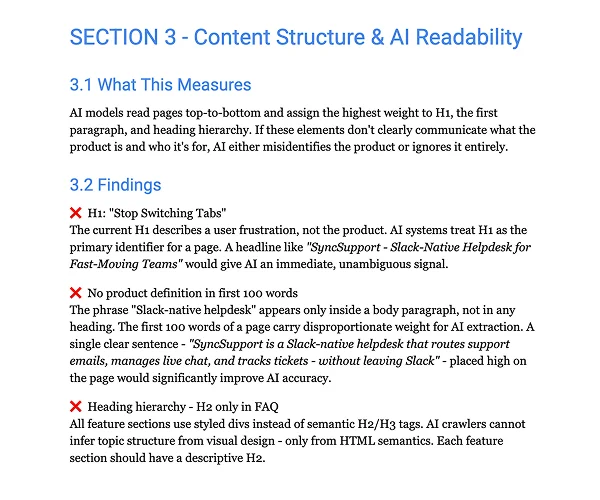
- H1 describes pain, not the product - no category definition in headings
- No product definition in first 100 words of homepage
- FAQPage schema missing across all pages
- Zero referring domains - no external authority signals
- No listings on G2, Capterra, Product Hunt, or Crunchbase
- Only 1 blog post - no use cases, no comparison pages
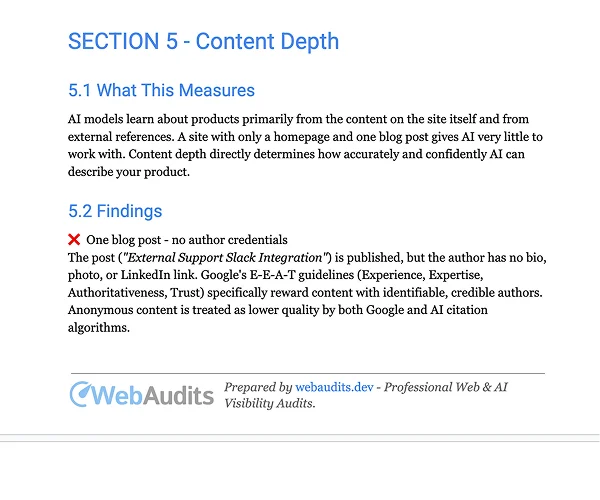
- Blog author has no bio or credentials (E-E-A-T gap)
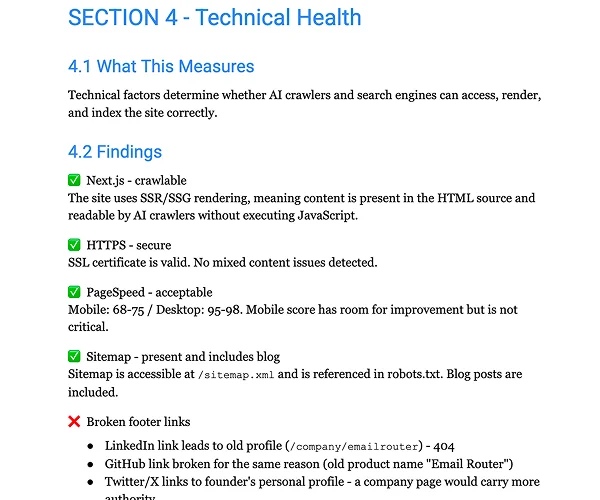
- Broken social links in footer (LinkedIn 404, GitHub 404)
- Placeholder content in testimonials section
What the Audit Covered
The audit assessed four areas that directly determine how AI search engines perceive, describe, and recommend a SaaS product.
AI Perception Test
Tested how major AI models - Google AI Overview, ChatGPT, Perplexity, Claude - currently describe SyncSupport. Identified the misidentification issue with Sync.com and mapped the exact content gaps causing it.
Content & Structure
Reviewed heading hierarchy, product definition placement, and first-100-words content. Flagged the absence of category naming in the H1 and the pain-point framing that works for humans but creates ambiguity for AI crawlers.
Authority & Trust Signals
Audited all external authority signals: referring domains, directory listings, review platforms, and social profiles. Found zero external validation - the weakest area of the entire audit and the highest-impact fix available.
Structured Data & E-E-A-T
Checked schema markup implementation, author credentials, founder information, and trust signals. FAQPage schema was absent entirely. The About page lacked any founder background - a key credibility signal for AI models evaluating new products.
The Audit Findings
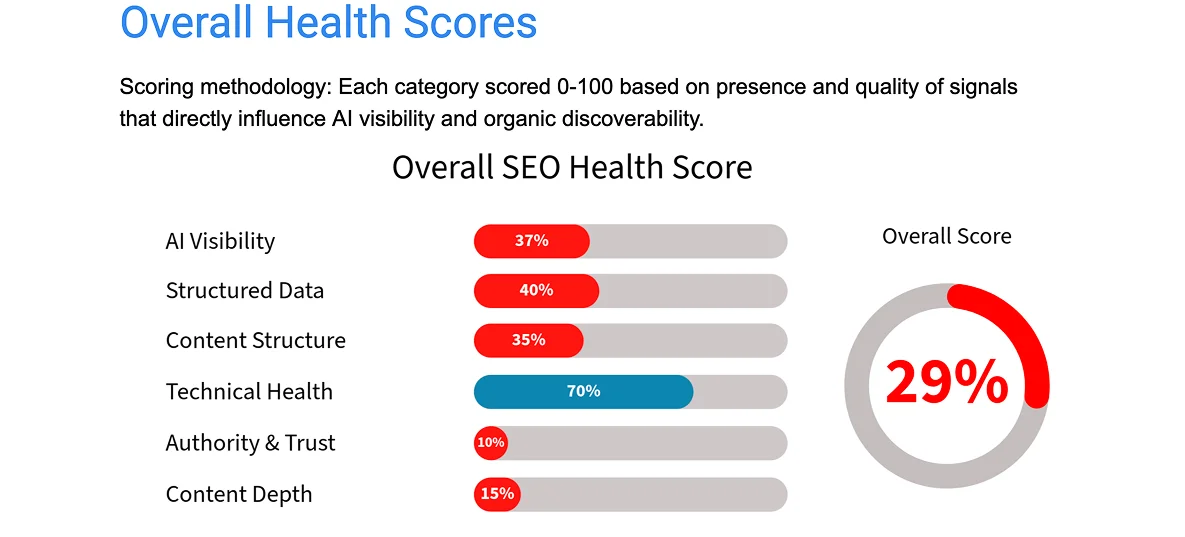
AI Visibility Health Score - SyncSupport, April 2026
Health scores are based on a weighted assessment across four categories: AI Visibility, Content, Authority, and Trust. Each category scored 0-100 based on the presence and quality of signals that directly influence how AI search engines perceive and describe the product.
Web Audits met all project milestones and provided a well-documented and well-structured SEO audit. The team was consistent and provided all the required details. They delivered work ahead of time and communicated via email. The client was impressed by the audit's accuracy.
Key Findings from the Audit
The main issues found and documented across AI visibility, content structure, authority signals, and trust.
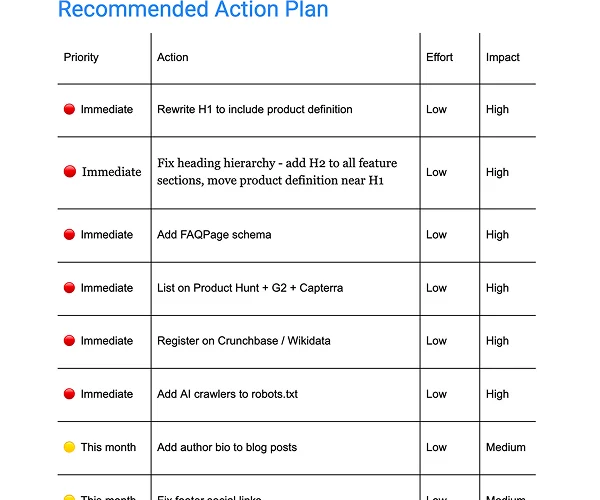
A branded search for "SyncSupport" in Google AI Overview returned a full description of Sync.com - a cloud storage and file-sharing service - completely unrelated to SyncSupport. The product itself was not mentioned at all. This happens because the homepage never names the product category in a heading, and the brand name is similar enough to an established product that AI models resolve the ambiguity in favour of the better-known one. Fixing this starts with a single H1 rewrite that includes both the product name and its category.
The homepage H1 uses pain-point messaging without naming the product category in any heading. This works well for human visitors who already understand the context, but AI crawlers extract product definitions from the primary content hierarchy. Without a category name - "helpdesk", "customer support platform", "Slack ticketing tool" - in or near the H1, AI models have nothing to anchor their product description to. The fix: rewrite the H1 to include both the product function and its category.
AI models weight the opening content of a page heavily when forming their understanding of a product. The first 100 words of the SyncSupport homepage contain no sentence that clearly states what the product is, what it does, and who it's for in plain language. Adding a single product-definition sentence above the fold - "SyncSupport is a Slack-native helpdesk that routes emails, manages live chat, and tracks support tickets" - would give AI crawlers an immediate anchor for accurate product identification.
Ahrefs shows zero referring domains. There are no listings on G2, Capterra, Product Hunt, or Crunchbase - the primary sources that AI tools like ChatGPT, Perplexity, and Claude use to verify that a SaaS product exists and to pull basic product facts from. Without these, AI models have no external validation to draw on. A Product Hunt launch and Crunchbase registration are the two quickest wins in the audit - both free and indexed quickly.
FAQPage schema was not implemented on any page. This type of structured data directly feeds AI citation engines - Perplexity, Google AI Overview, and ChatGPT browsing all preferentially pull from structured FAQ data when generating answers about products. It's also one of the fastest schema implementations available: a well-structured FAQ block with 4-6 questions added to the homepage or a dedicated FAQ page can begin show up in AI-generated answers within days of indexing.
The blog author has no bio or credentials. The About page contains no founder background, experience, or professional history. For an early-stage product with no external authority - no backlinks, no press mentions, no review platform profiles - founder credibility is one of the few available trust signals that AI models can assess. Google's own guidance on E-E-A-T specifically calls out author credentials and "About" page content as key signals. Both are quick, free fixes that carry weight disproportionate to the effort required.
Three footer links are broken: the LinkedIn link points to an old company profile (companyemailrouter - 404), the GitHub link fails for the same reason, and the Twitter/X link goes to the founder's personal profile rather than a company page. Broken links are a direct negative signal for both search engines and AI crawlers assessing site credibility. Fixing them takes minutes and removes an unnecessary trust penalty from a site that already has thin external authority.
From the Audit Report
Real screenshots from the audit delivered to the client - issues identified, documented, and ranked by priority.
Services Used in This Project

AI Visibility Audit
Assessment of how AI search engines - Google AI Overview, ChatGPT, Perplexity, Claude - perceive, describe, and recommend your product. Covers content clarity, structured data, authority signals, and E-E-A-T.

SEO Audit
On-page analysis covering meta tags, heading structure, keyword usage, content uniqueness, internal linking, and schema markup opportunities.

Website Audit
Full-site review covering UX, conversion flow, content structure, and technical health - with prioritised fixes and implementation support.
Get a FREE Expert Review of Your Website
Manual review by a real SEO expert. No AI. Delivered within 24 hours.
- Manual review
- Personalized findings
- 24h delivery